
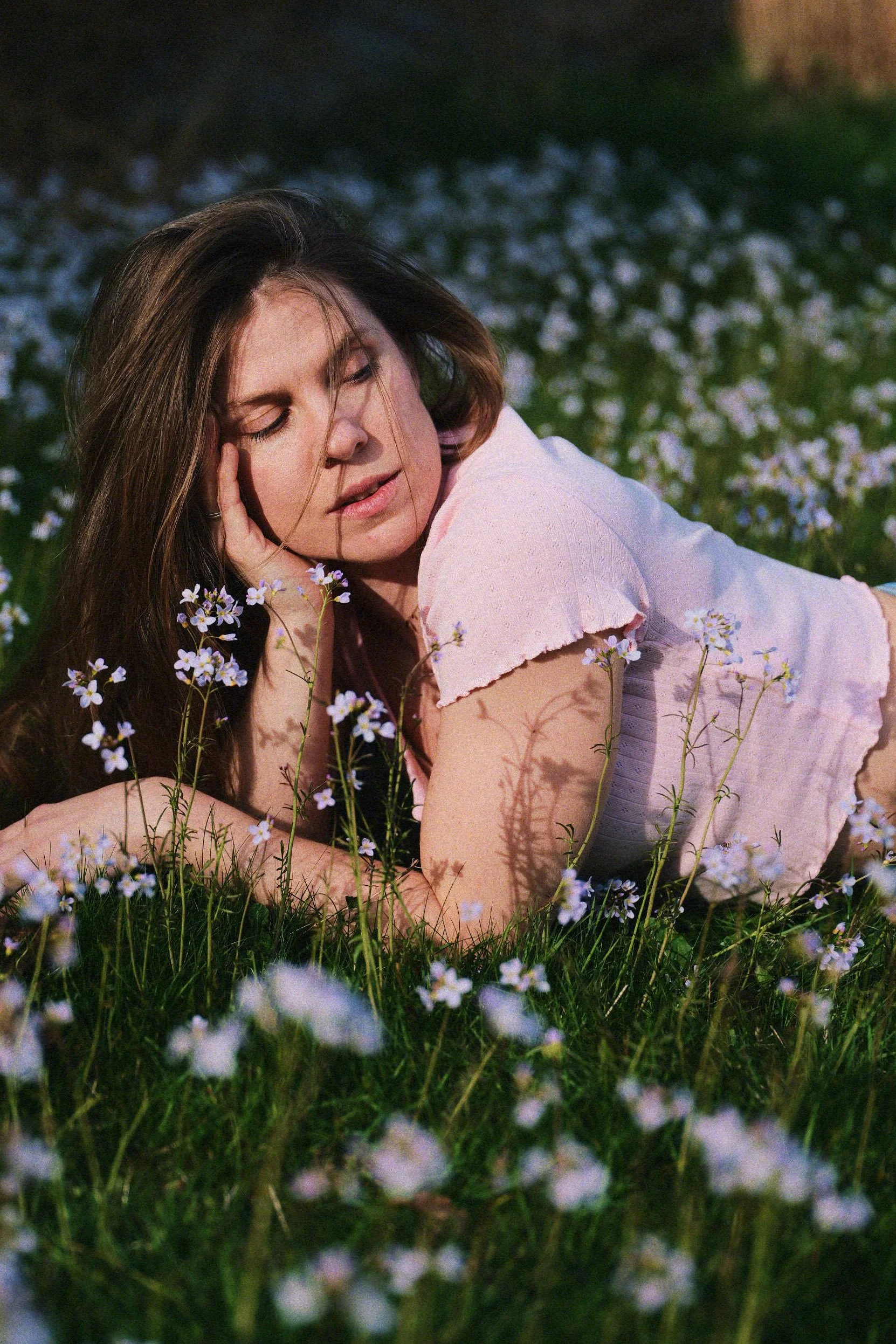
Pick your pack
◉ Kodak Portra 400 Lightroom profile
⊞ Kodak Portra 400 LUT in sRGB, Rec.709 and ACEScct
✓ Base presets
◉ 133 Lightroom profiles
⊞ 133 LUTs in sRGB, Rec.709 and ACEScct
✓ Base presets
⛶ 20 practice raw images
True film simulation
Original → Negative → Positive
Remember photographic paper?
The art of printing a negative onto photographic paper feels like an old memory. Back in the day it wasn’t enough to have a negative, you needed to print the photos on paper. And that’s important. The paper choice was as critical as the film you shot with. But nowadays, everyone digitally scans their negatives, and the beautiful colors of photographic paper have been forgotten.
The modern analog process is handicapped.
Not anymore. Ladies and gentlemen, you can once again choose your positive.
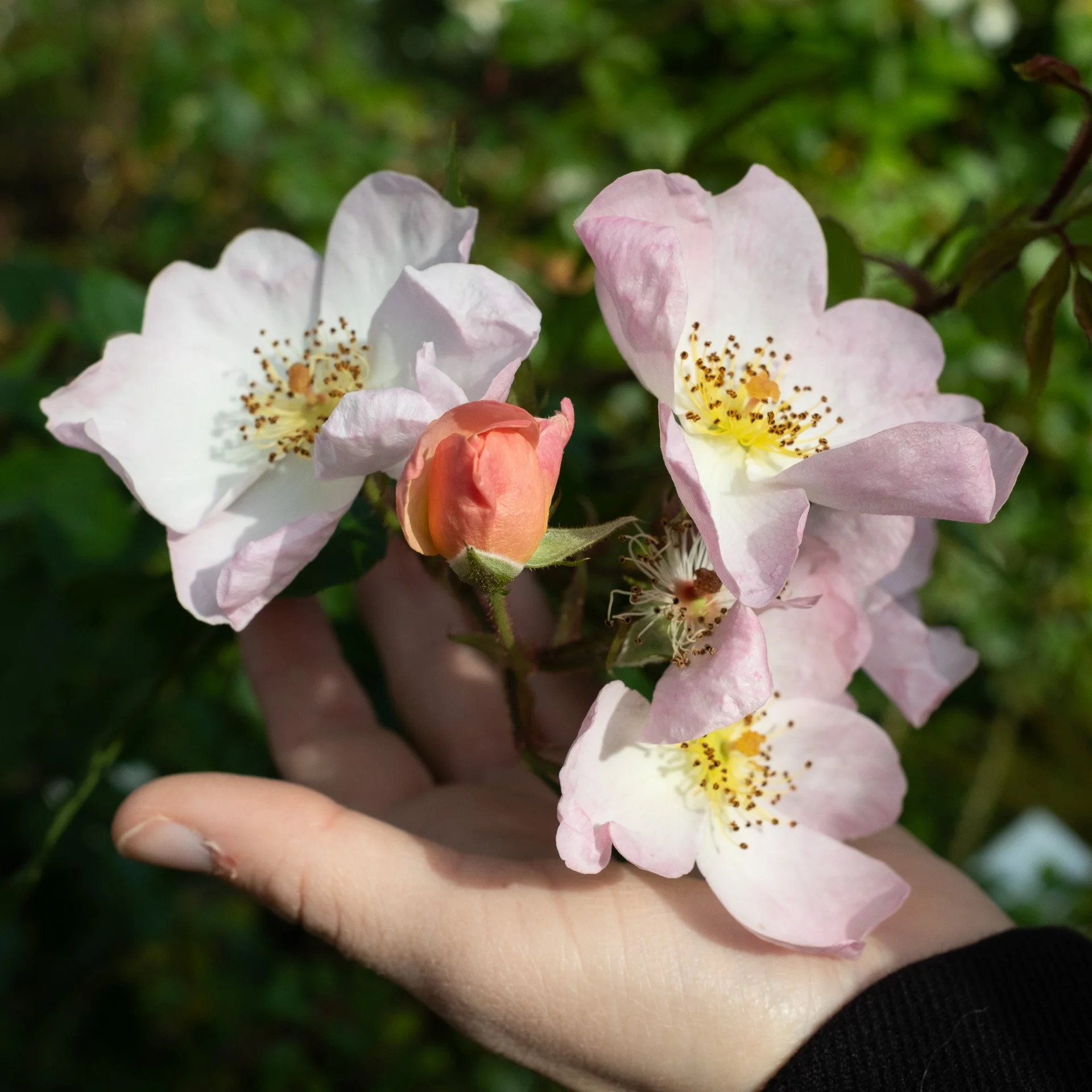
Original Image
The original image is converted into spectral data in preparation for a real film simulation pipeline.
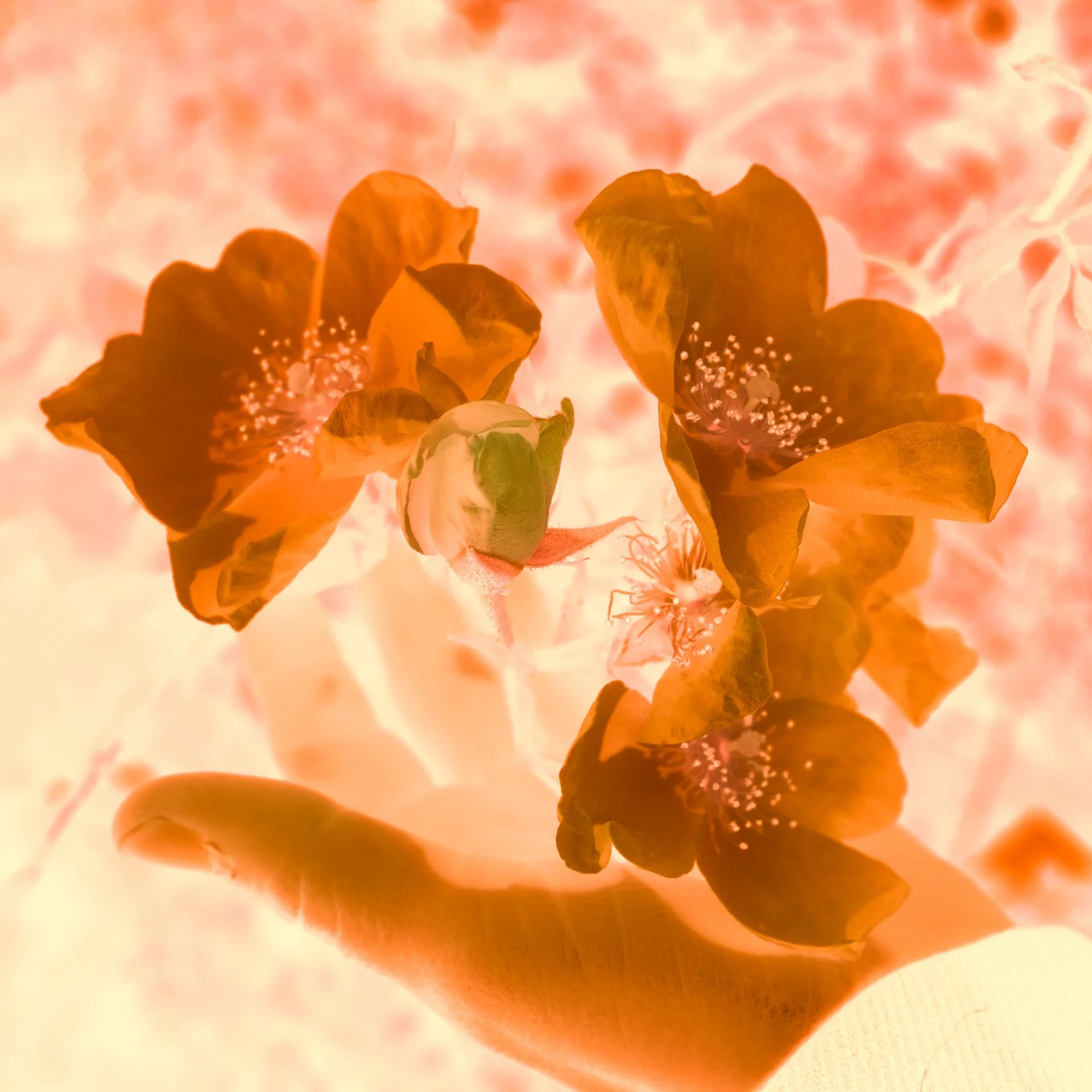
Negative
The negative is exposed to the spectrum and developed. We have 19 negatives to choose from (yes, we profiled Portra).
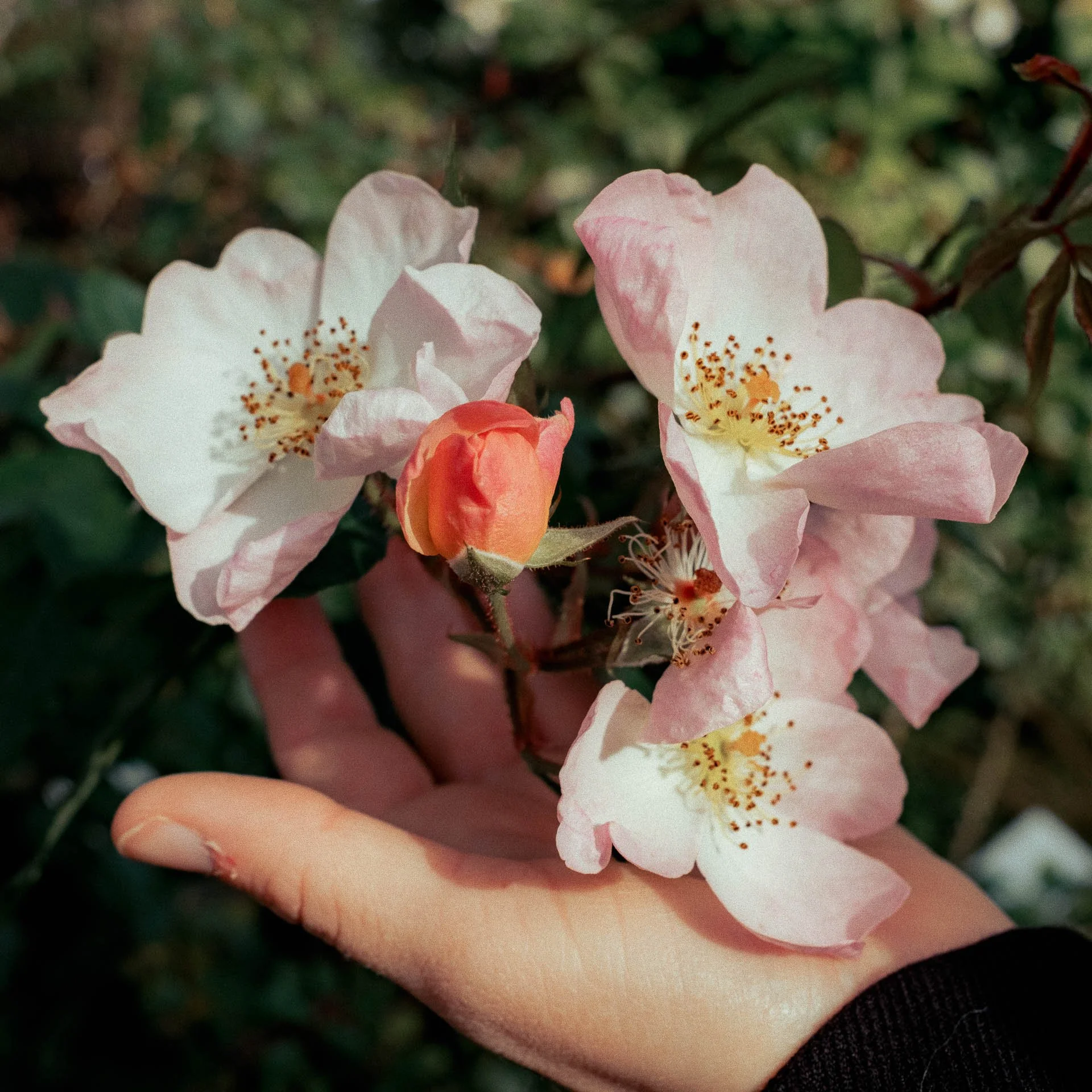
Positive
In a true analog workflow, the positive is where the image comes to life. We have both paper and film positives.
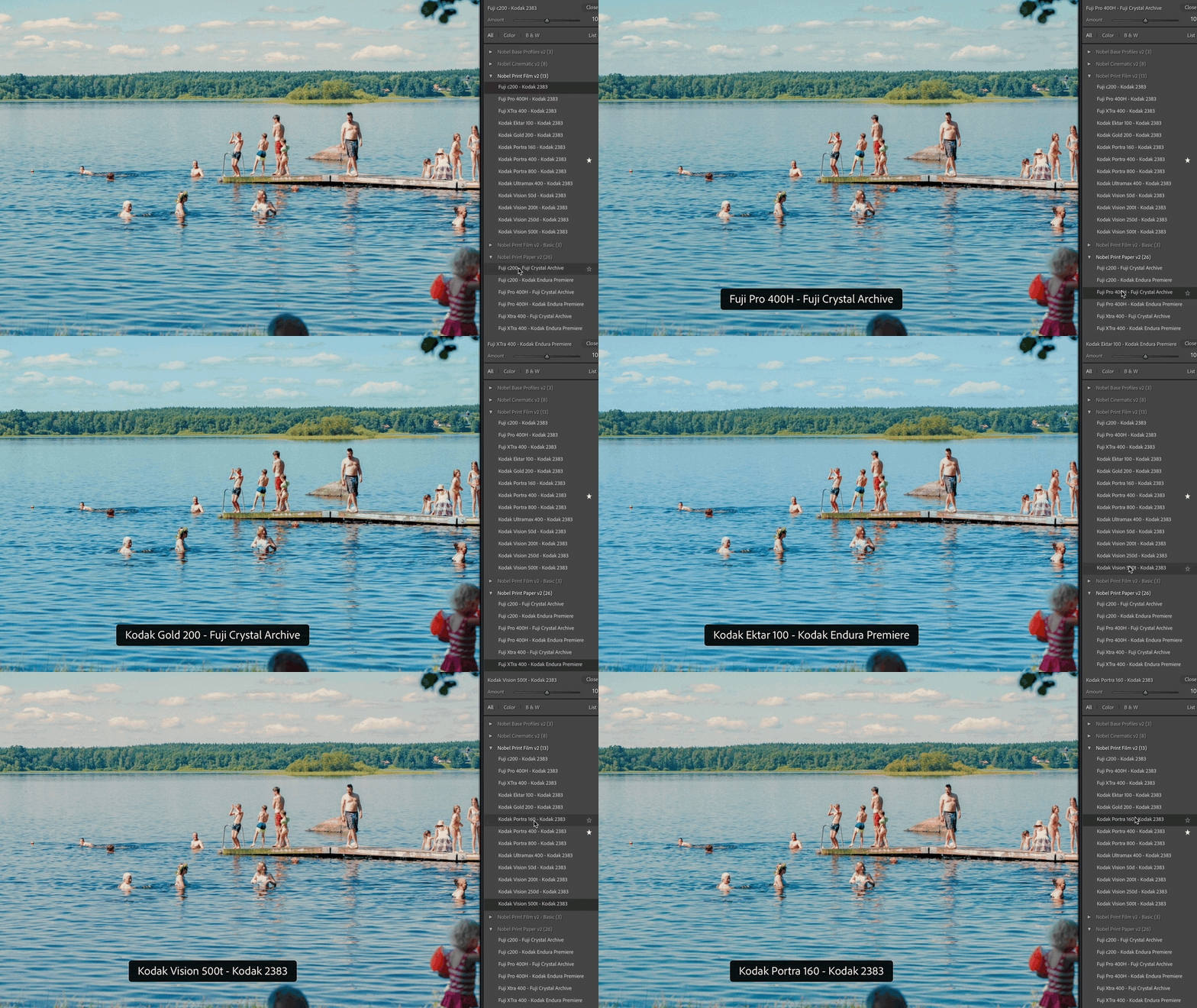
More than presets.
Profiles.
Each one of our 133 profiles simulates the entire analog photography pipeline: negative exposure, development, positive print and development.
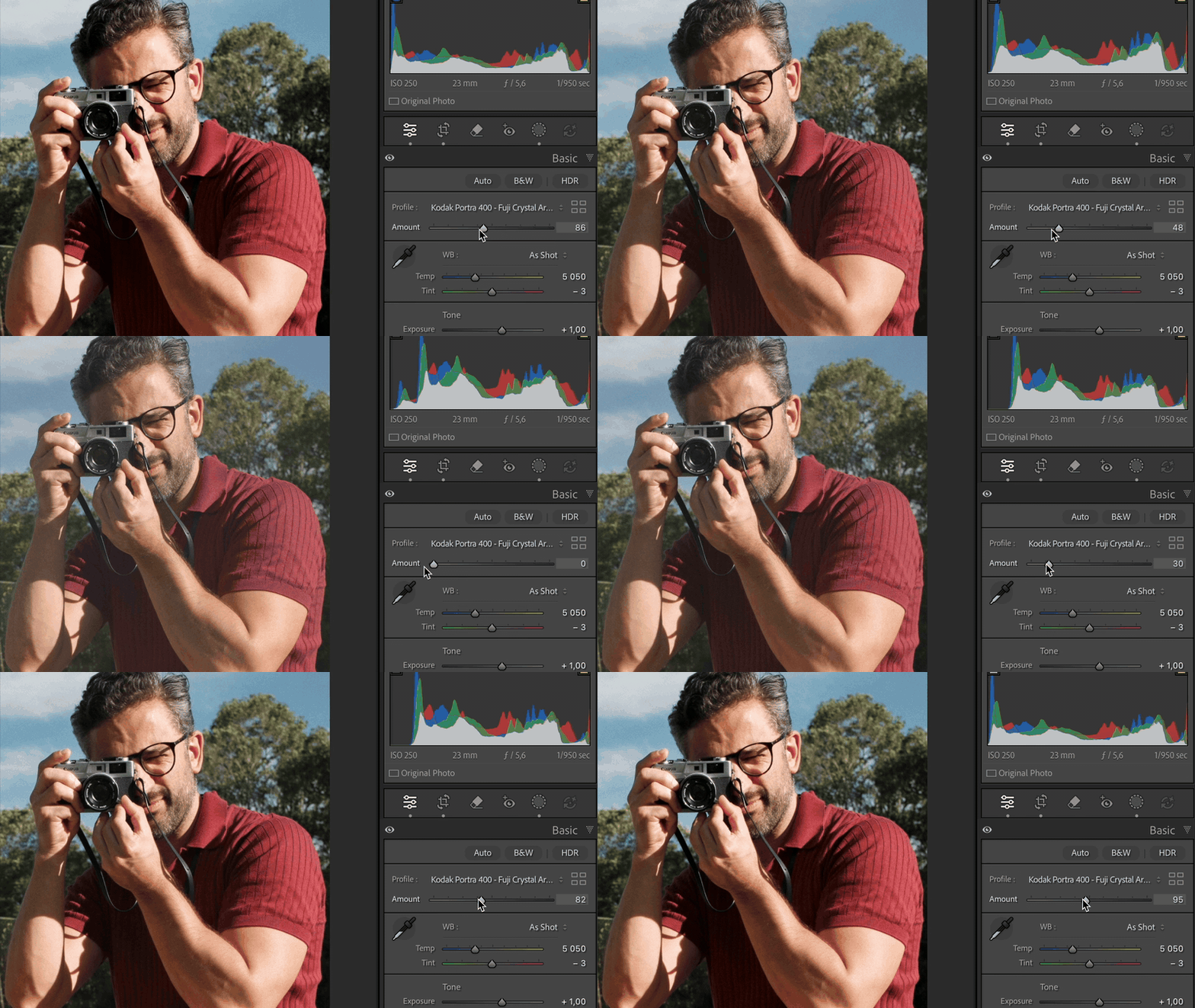
Never overcooked
Use Lightroom’s amount slider to dial in the strength. We do believe you’ll go full strength though.
What’s included
19 Negative Films
-
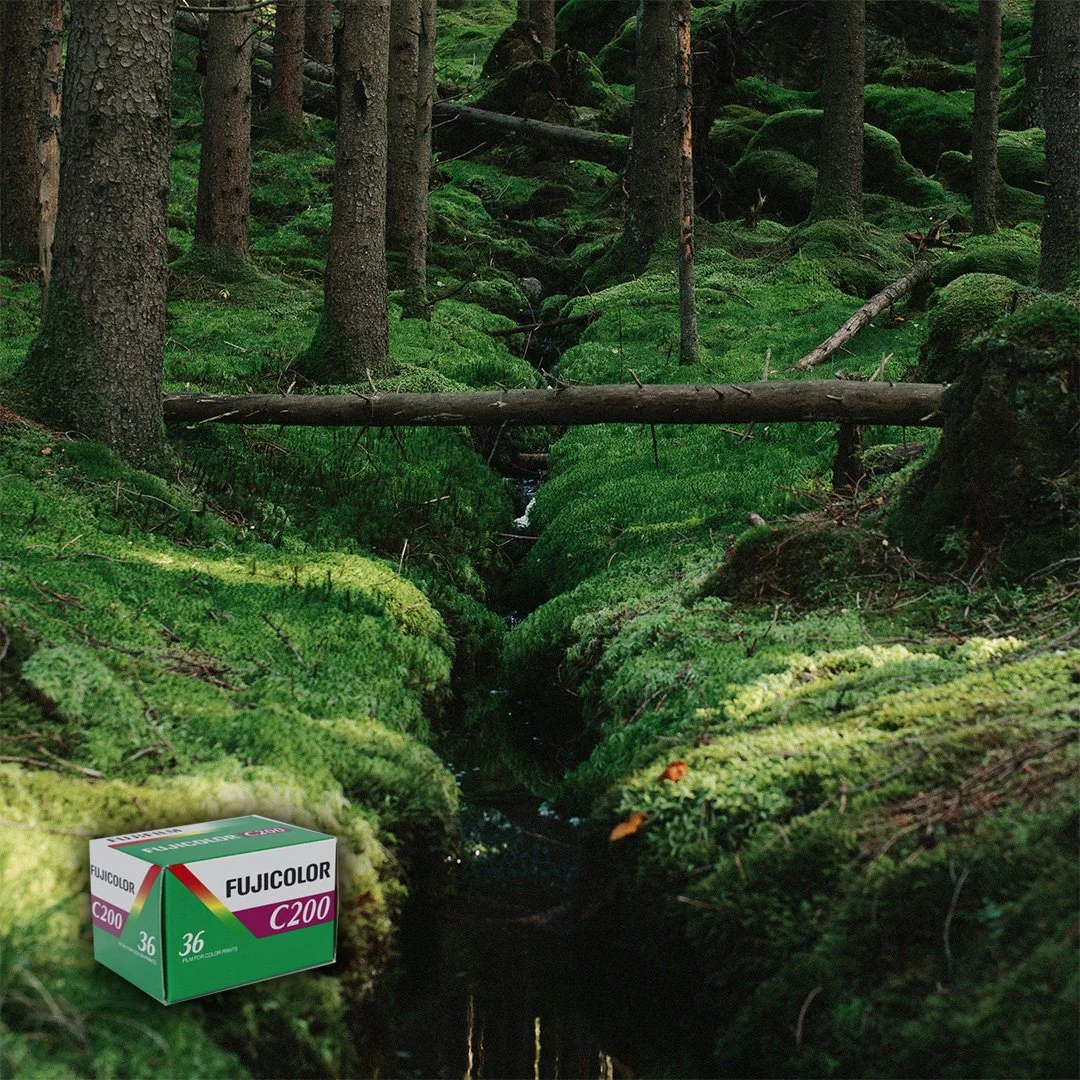
![A lush green forest with moss-covered rocks, trees, and fallen logs, and a small creek running through it. There is a box of Fujicolor C200 film on the ground in the foreground.]()
Fujicolor C200
Punchy colors and slightly cool overall. Warm skin tones, moderate contrast, clean highlights, and a moody daylight look. Pair with Fuji Crystal paper to keep that cool Fujifilm character.
-
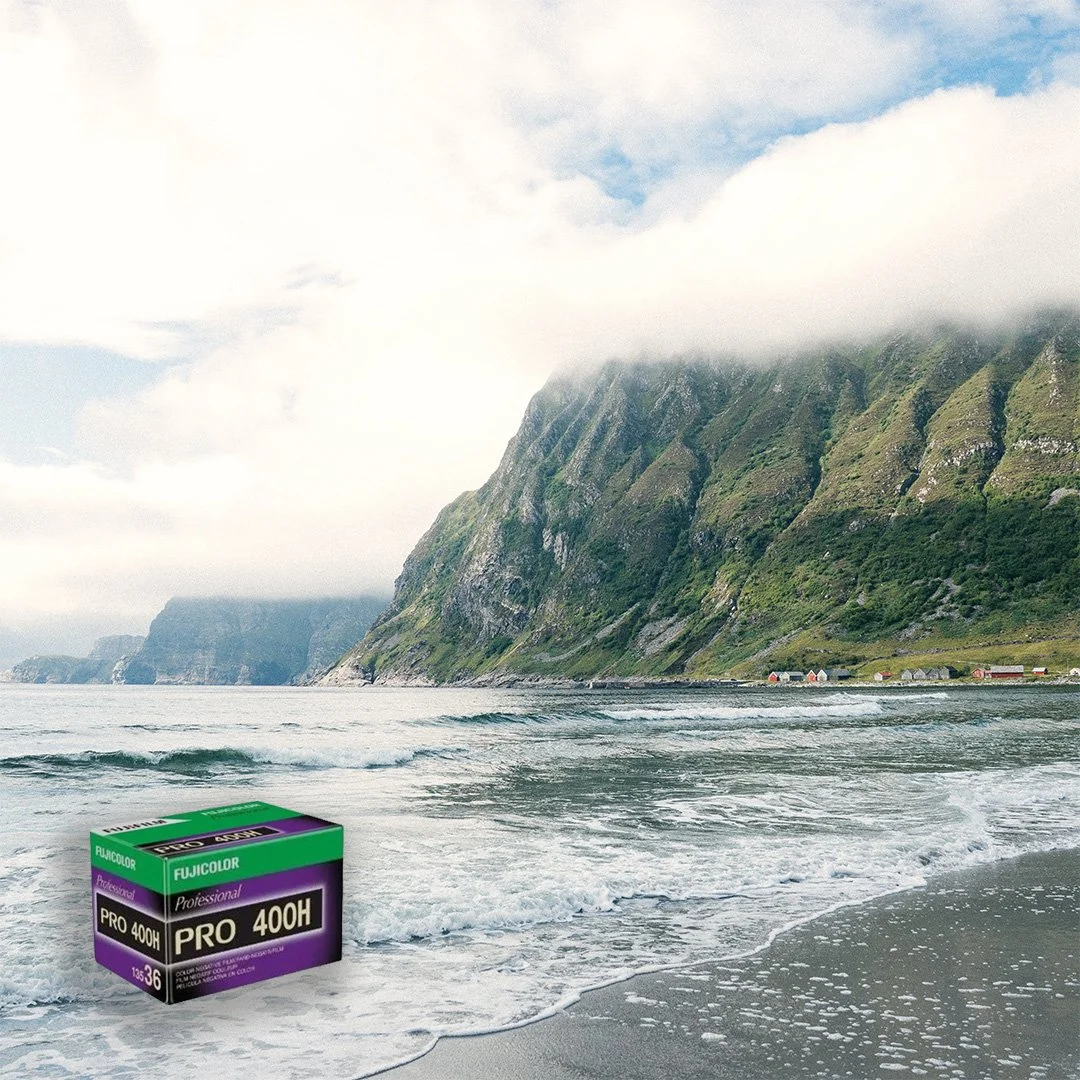
![Seaside view with mountains partially covered in clouds, waves on the shore, and a box of Fujicolor Pro 400H film in the foreground.]()
Fujifilm Pro 400H
Soft, pastel palette and creamy skin tones. Minty greens, cool-leaning neutrals. Elegant, muted color separation. Lets the print medium be the dominant character creator.
-
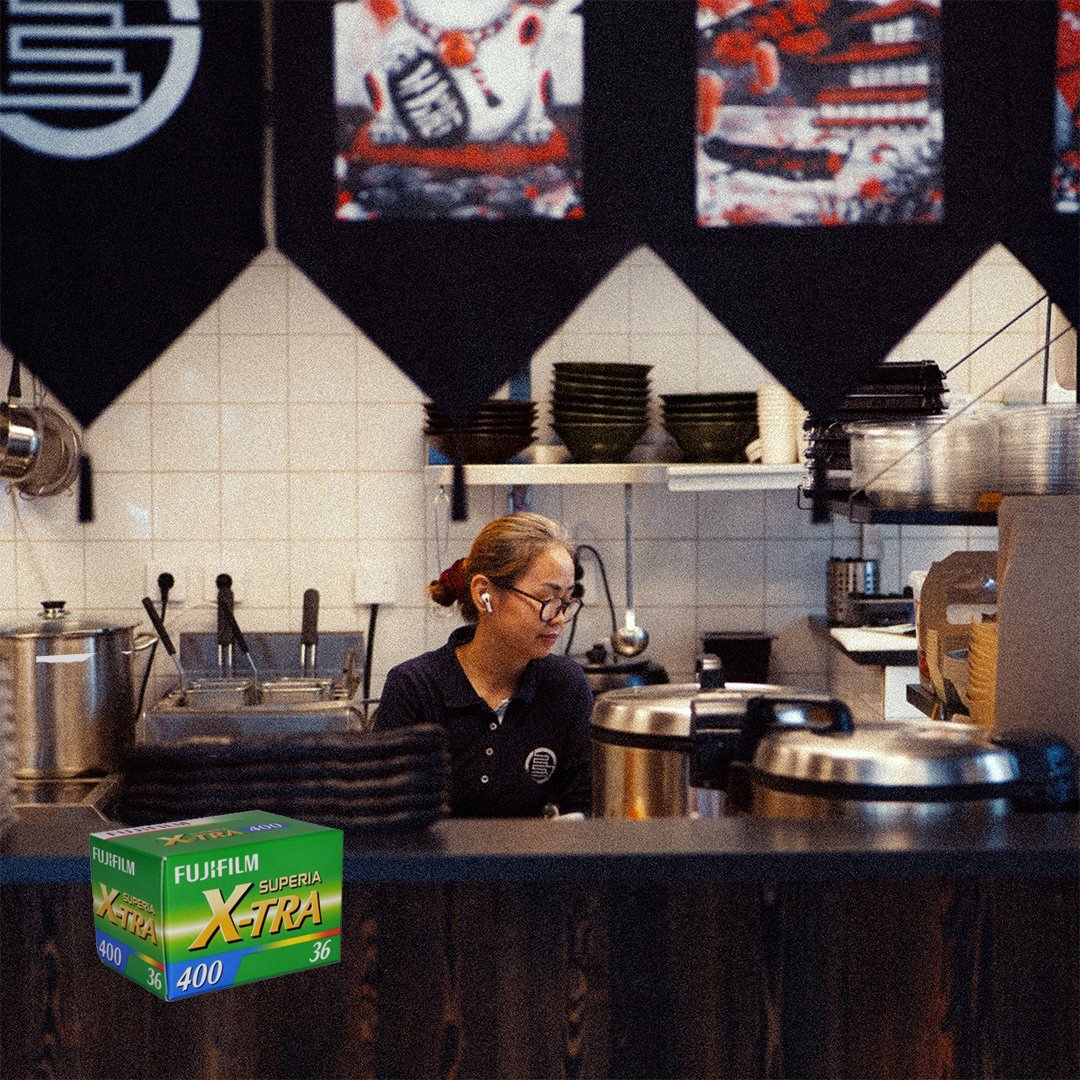
![A woman working behind a counter in a kitchen, with black and white tiled walls, stacked bowls on a shelf, and several rice cookers in front of her. A Fujifilm Superia X-TRA film box is also on the counter.]()
Fujicolor X-TTRA 400
Vibrant and contrasty. Strong greens and cyans, bright reds, slightly cool shadows. Energetic, punchy look with crisp midtones. When using it, remember, more is more.
-
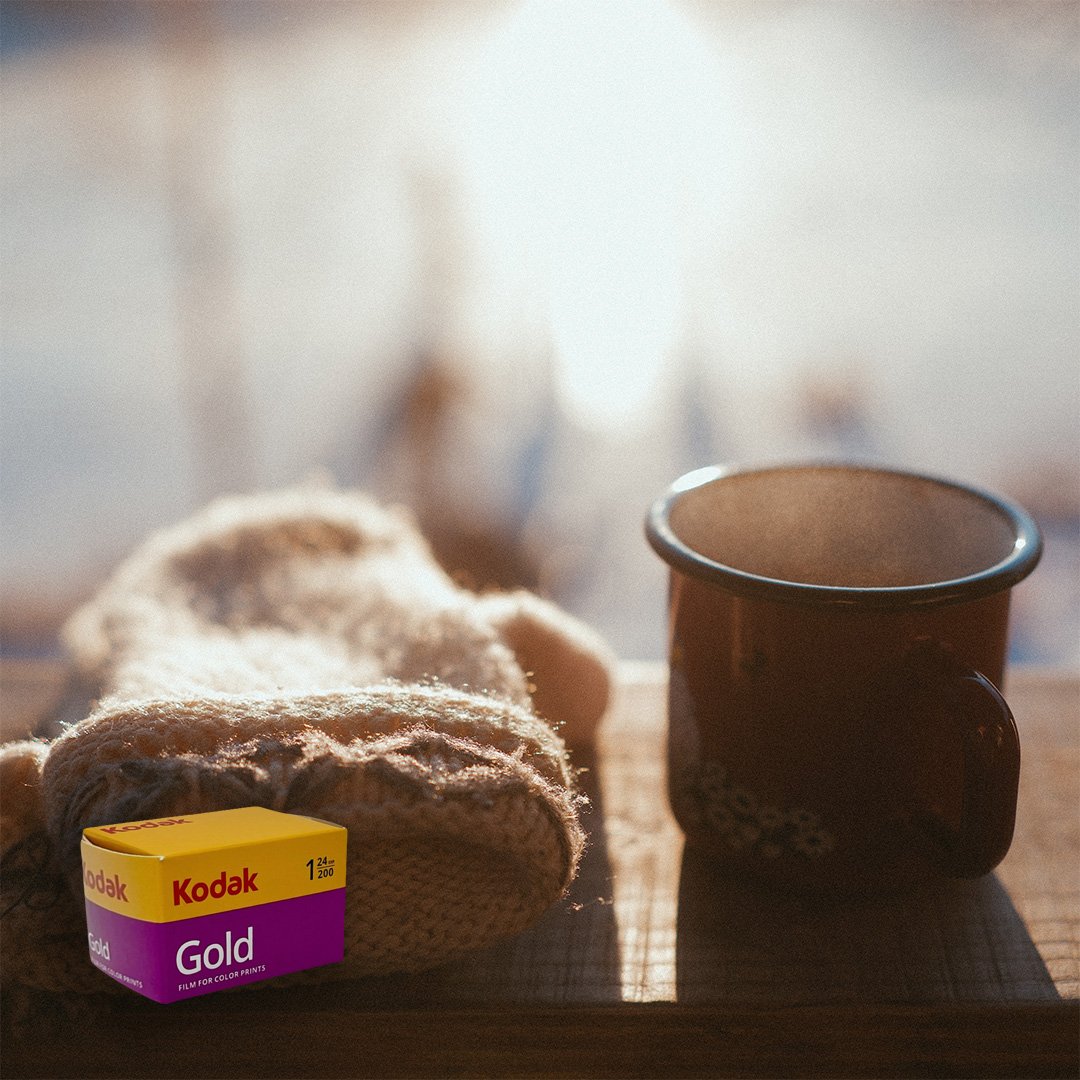
![A cozy scene with a pair of woolen socks, a black coffee mug, a box of Kodak Gold 35mm film, and sunlight streaming in, creating a warm, inviting atmosphere.]()
Kodak Gold 200
Warm, sunny colors. Golden yellows and oranges, rich reds, slightly nostalgic palette. Pleasing, warm skin tones. Pair with Kodak Portra Endura print paper to emphasise the warm tones.
-
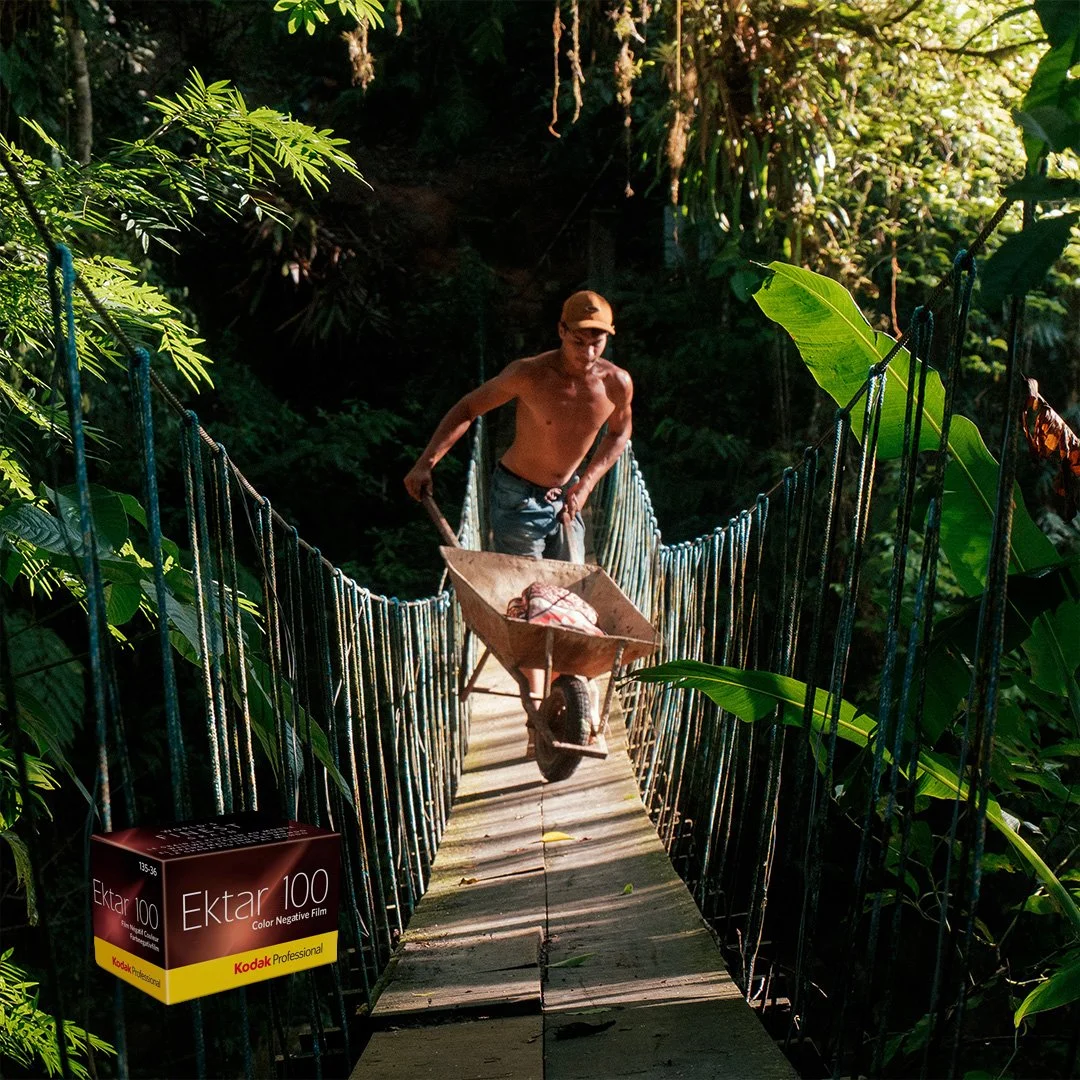
![A man pushing a wheelbarrow across a narrow suspension bridge in a lush green jungle.]()
Kodak Ektar 100
Saturated and clean color. Bold reds, deep blues, crisp greens. Very punchy, glossy “postcard” look. Pair with Fuji print paper to maintain color accuracy.
-
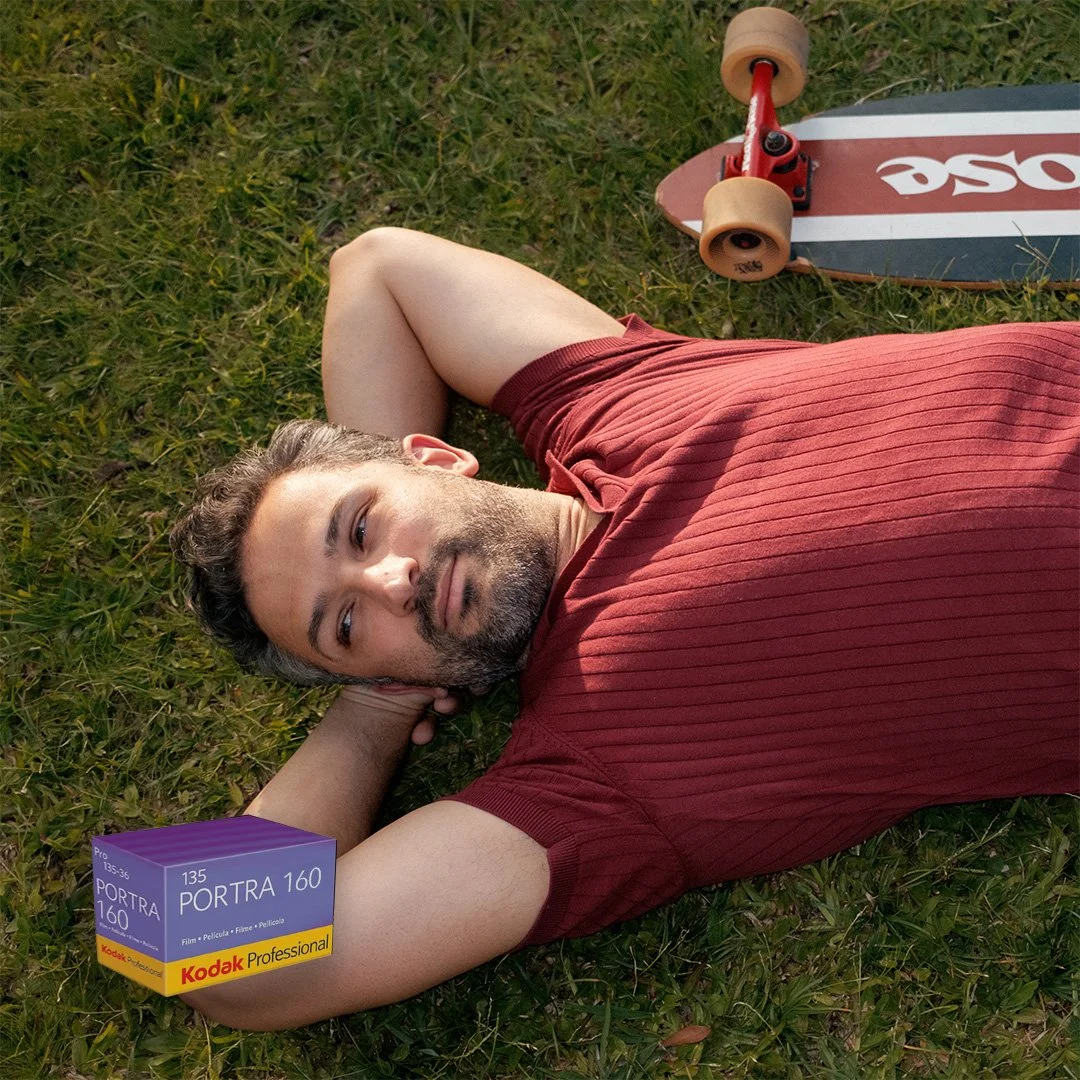
![Luke lies on grass with his hand behind his head, looking thoughtful. He has gray hair and a beard, wearing a red ribbed shirt. A Kodak Professional PORTRA 160 film box is overlayed. A skateboard with red trucks and tan wheels is beside him.]()
Kodak Portra 160
Natural, restrained colors and soft contrast. Warm-but-neutral skin tones, with gentle saturation and a refined, airy pastel tendency. Pair with Fuji Crystal print paper to keep it subtle.
-
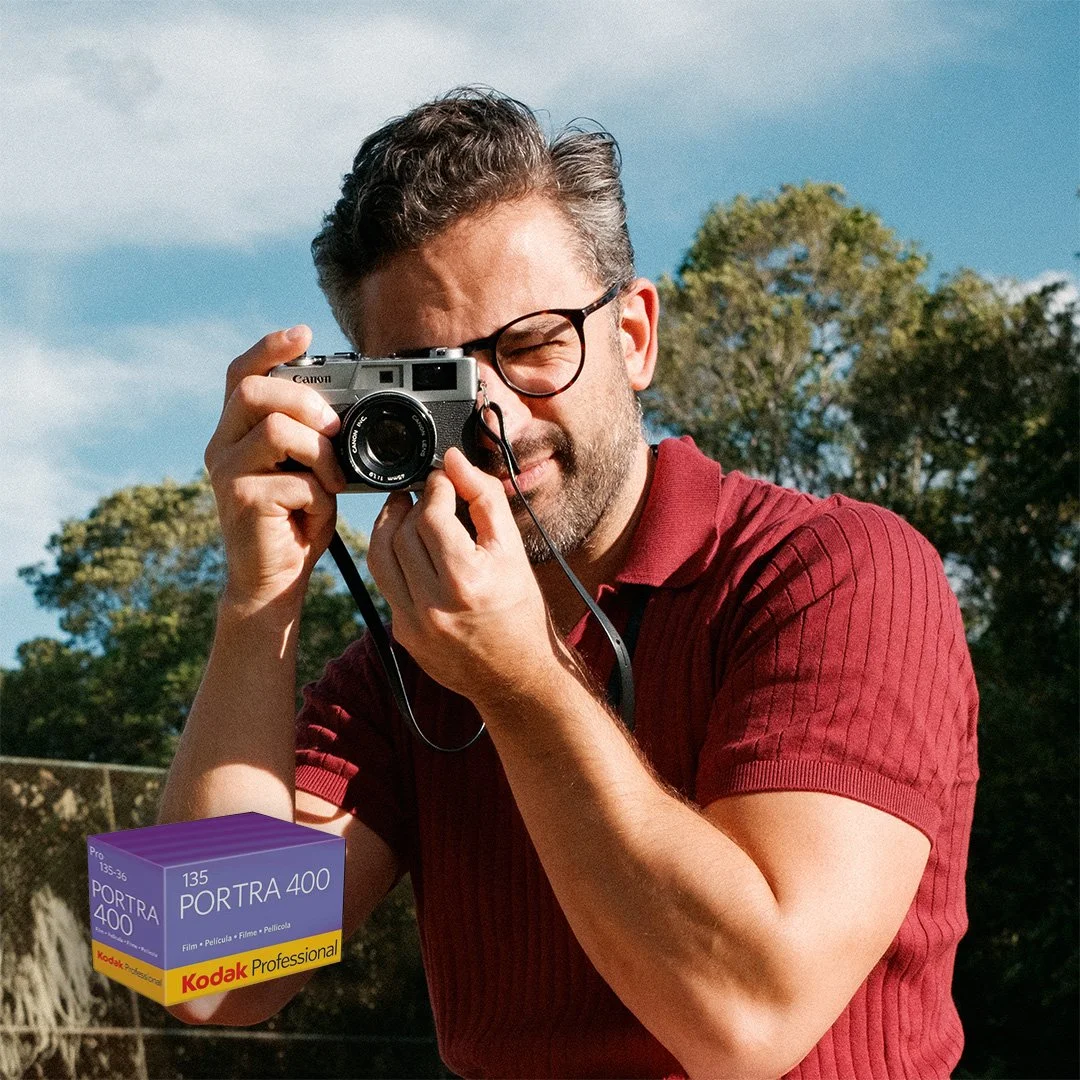
![Luke taking a photo outdoors with a vintage camera, wearing a red shirt, with trees and blue sky in the background.]()
Kodak Portra 400
True-to-life color. Neutral warmth and smooth tonal roll-off. Restrained saturation that gives flattering, consistent skin tones. Pair with Fuji Crystal print paper to keep greens separate from yellows.
-
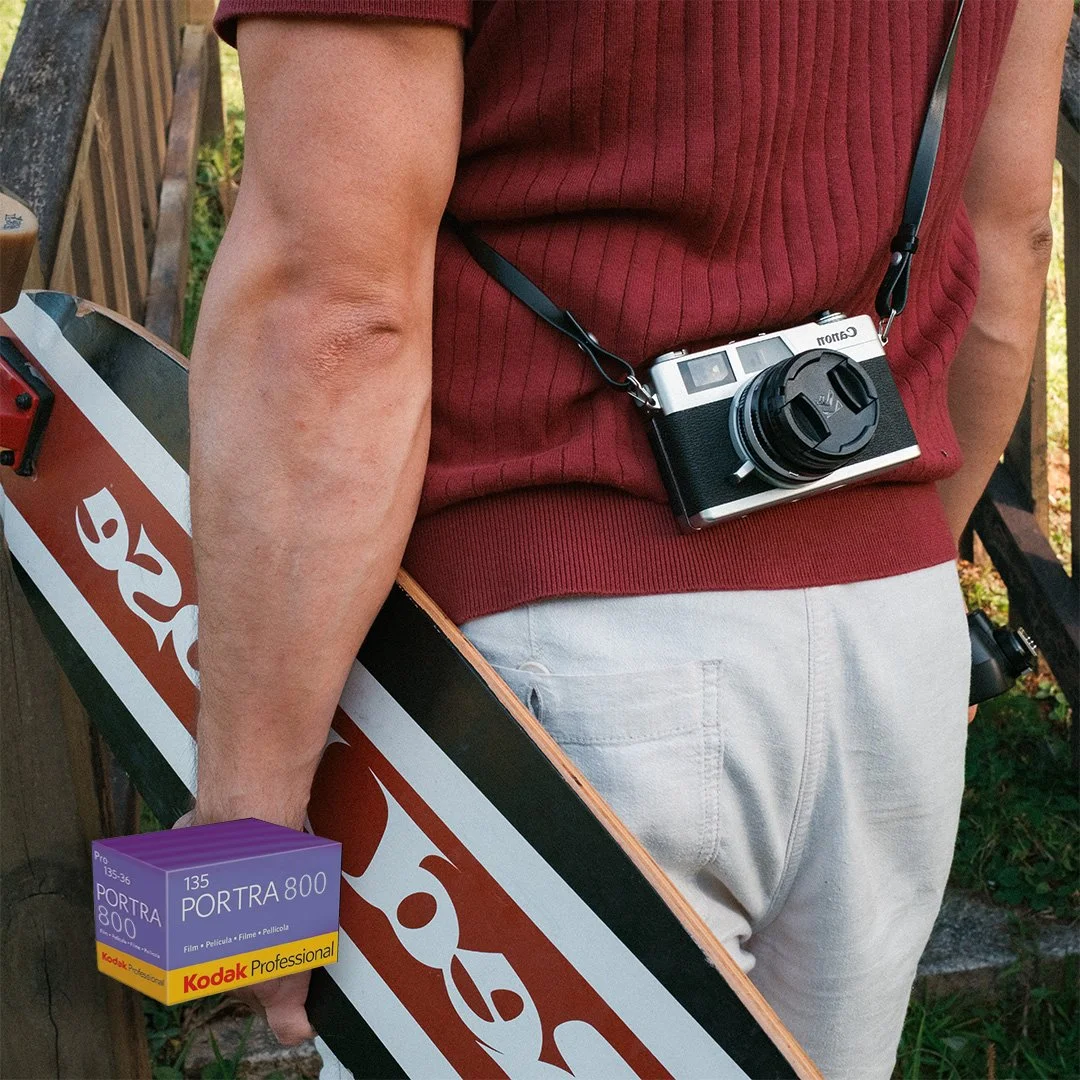
![Kodak Portra 800]()
Kodak Portra 800
Warm, slightly saturated color. Strong skin-tone rendering. Lively but not harsh shadows. Pair with Kodak Portra Endura print paper for extra warmth.
-
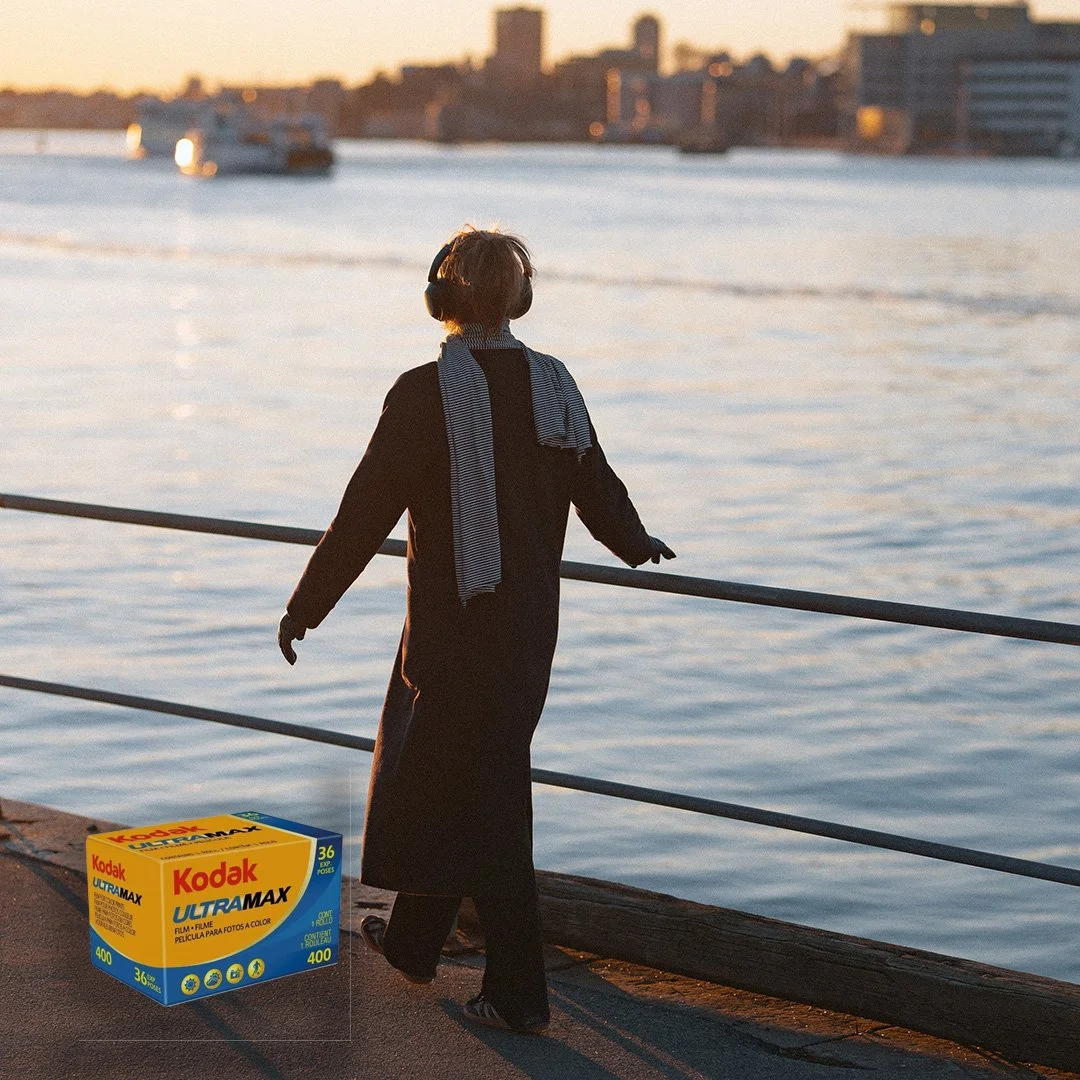
![Kodak Ultramax 400]()
Kodak Ultramax 400
Modern and surprisingly accurate colors with controlled saturation. Energetic daylight and flash look. The print medium is front and center here - experimentation is key.
-
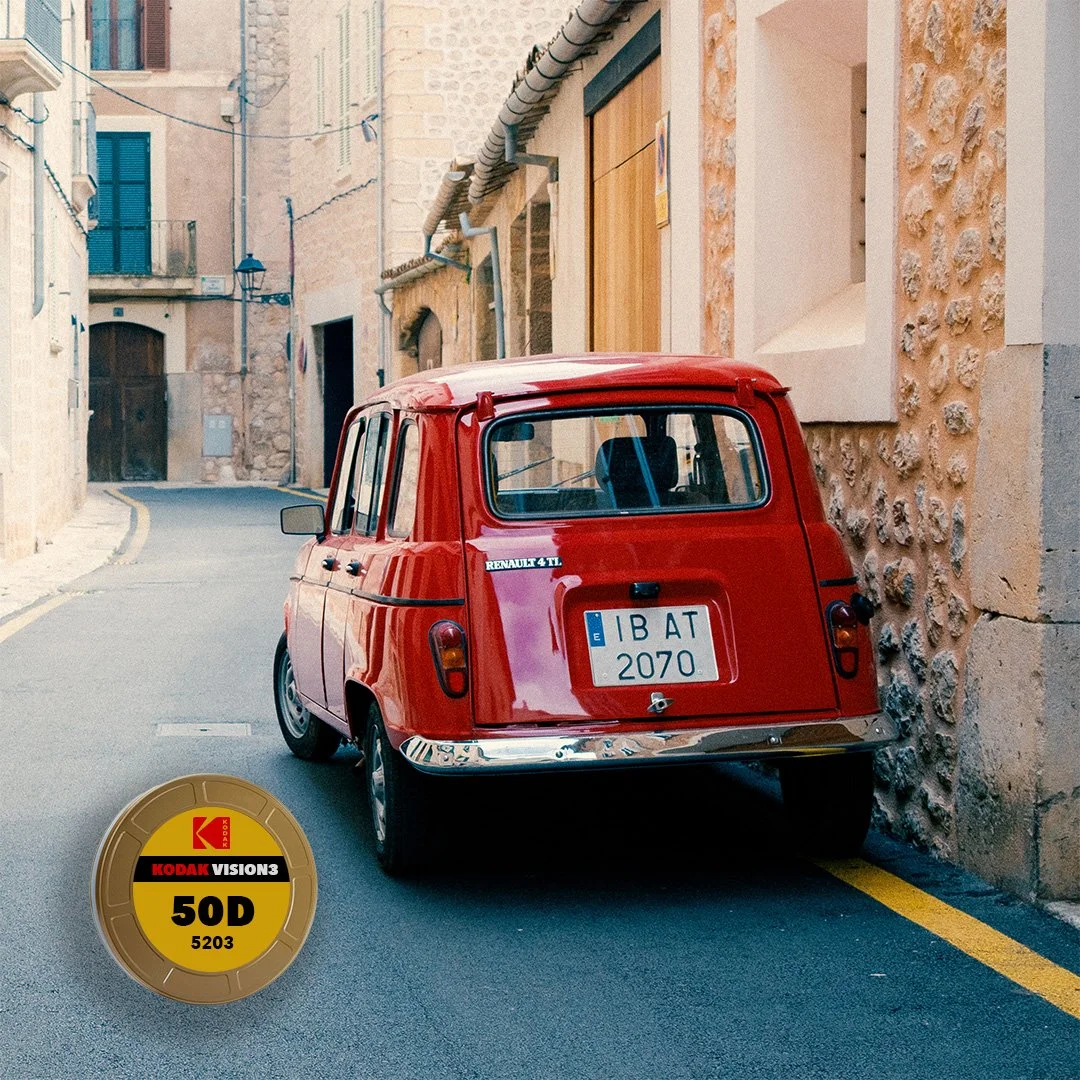
![Kodak Vision3 50D]()
Kodak Vision3 50D
Clean, modern color with tight grain. Color-accurate with controlled overall saturation. Pair with Kodak 2383 for a strong cinematic split tone and colors.
-
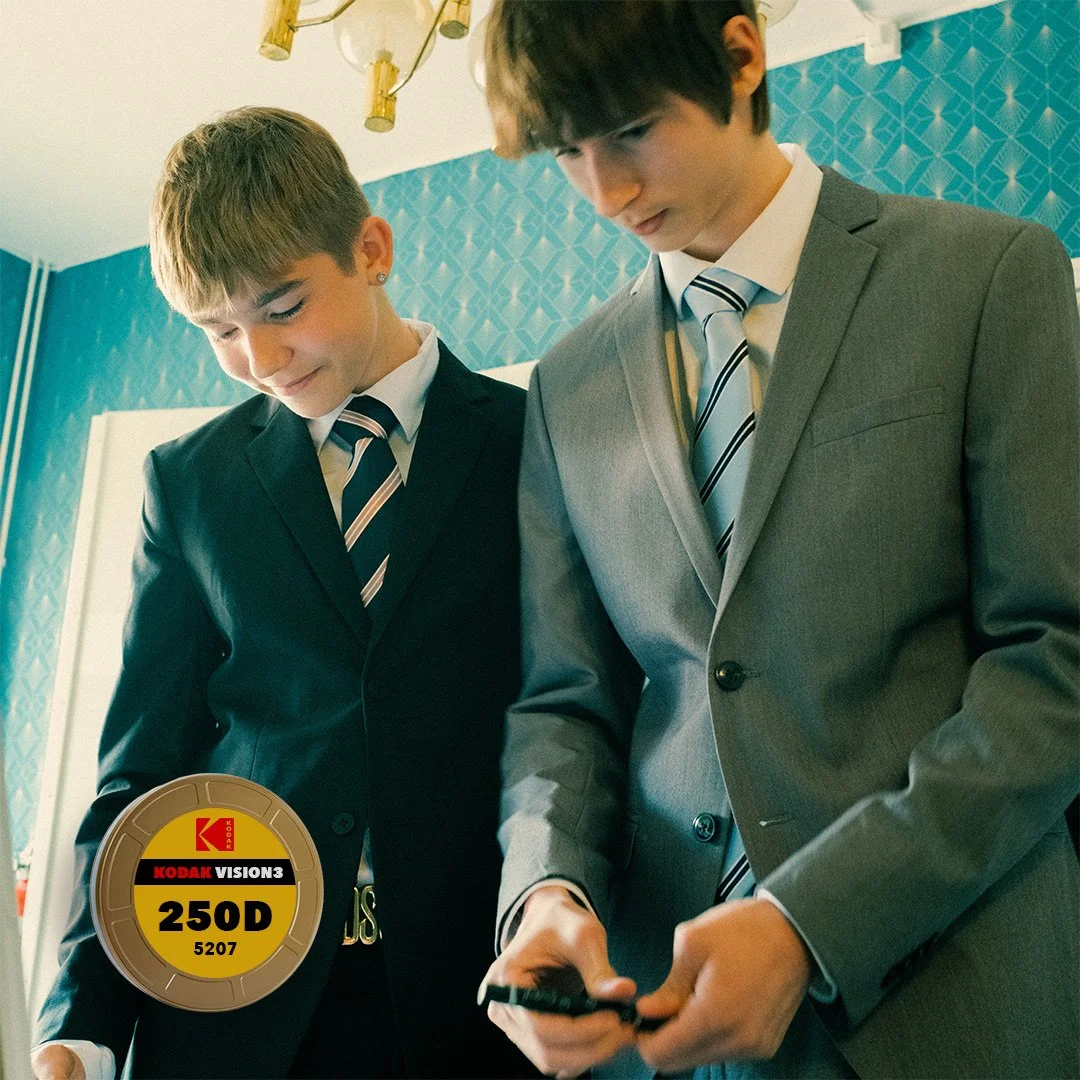
![Kodak Vision3 250D]()
Kodak Vision3 250D
Balanced, filmic color and gentle contrast. Warm highlights, natural greens, and controlled saturation for pleasant skin tones. Pair with Kodak 2383 for an immediate cinematic look.
-
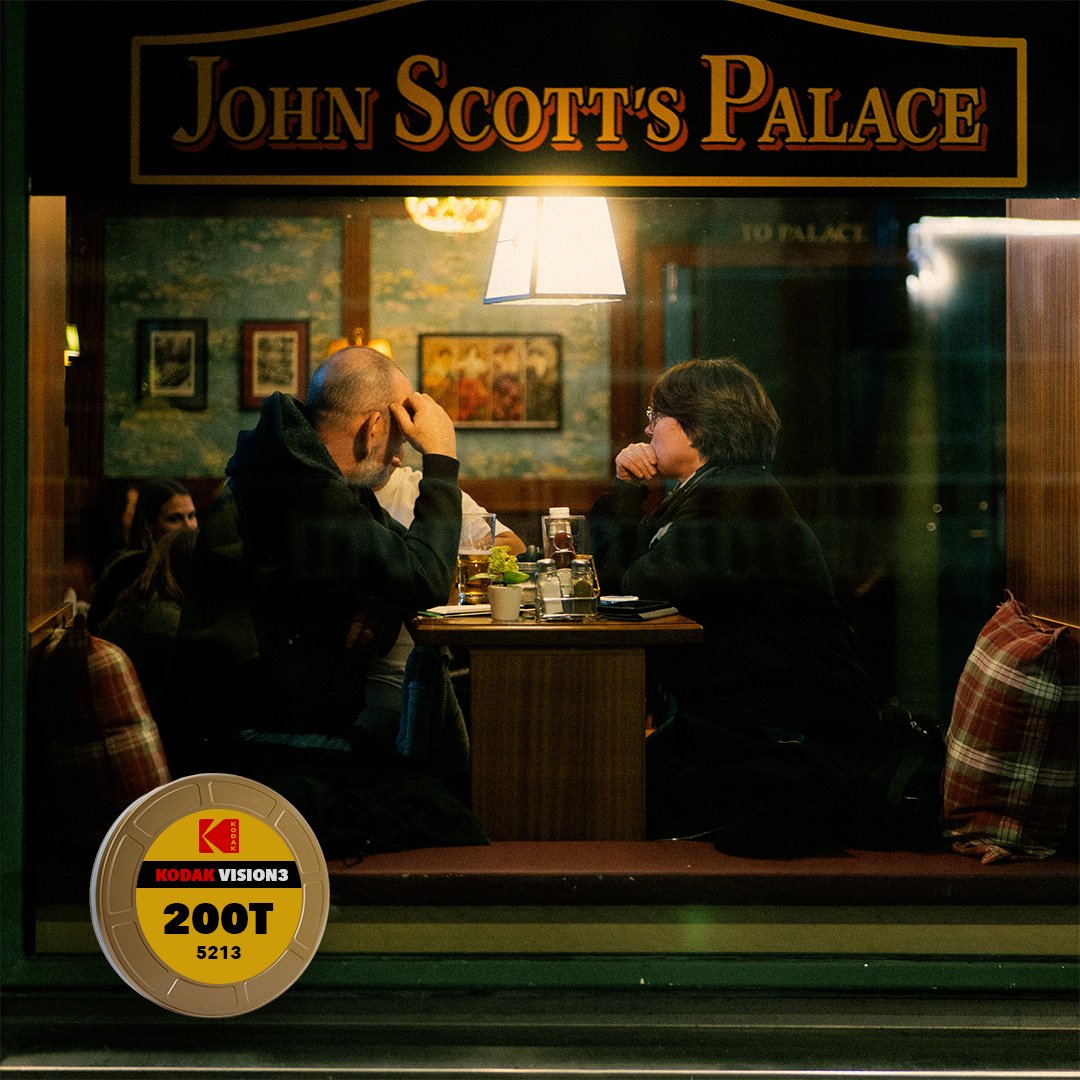
![Kodak Vision3 200T]()
Kodak Vision3 200T
Neutral-cool tungsten palette with clean blues and cyans. Restrained overall saturation with unmistakable filmic bias. Pair with Kodak 2383 for cinematic night scenes.
-
![Kodak Vision3 500]()
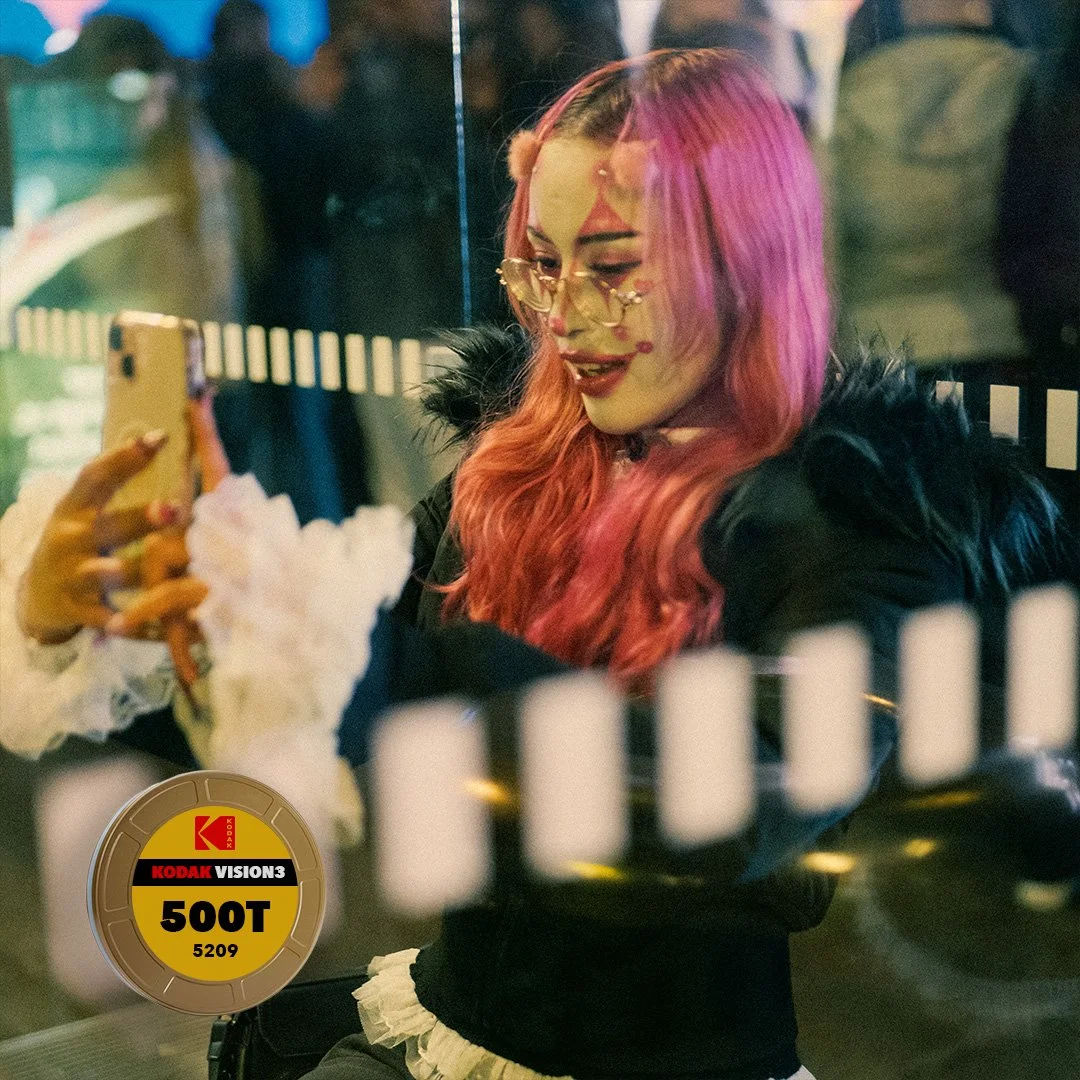
Kodak Vision3 500T
Cinematic, slightly cool tungsten look. Rich shadows and moderate saturation. Pair with Kodak 2383 for added overall warmth, and its characteristic split tone.
7 Positive Media
-
![Fujicolor Crystal Archive]()
Fujicolor Crystal Archive
Accurate colors, crisp blues and greens, and a punchy yet refined, modern look. Preserves the negative character while injecting a cool Fujifilm character.
-
![Kodak Endura Premier]()
Kodak Endura Premier
Neutral-to-warm paper with very punchy contrast. Golden greens and yellows render an unmistakable Kodak character - even from Fuji negative stock.
-
![Kodak Supra Endura]()
Kodak Supra Endura
Consumer grade print paper with golden greens and yellows and a sweet contrast.
-
![Kodak 2383 print film]()
Kodak 2383
Classic print-film look: warm highlights, cool shadows and slightly muted saturation. It bulldozes the negative character - see for yourself. Tweaking the white balance is key here.




Bonuses
-
Profiles are the base and do all the heavy-lifting. Presets are the cherry on top. There are 3 preset gr groups included:
Film Emulation: presets that build onto each of the negative stocks and bring them their full potential relative to what we collectively imagine they should look like.
Film components: Grain, bloom, vignette and soft lens presets for quickly adding character.
Film curves: Split tone and contrast curves representative of what we’ve come to believe a film stock should display.
-
20 raw files for practice. Quality results come from quality raw files.